
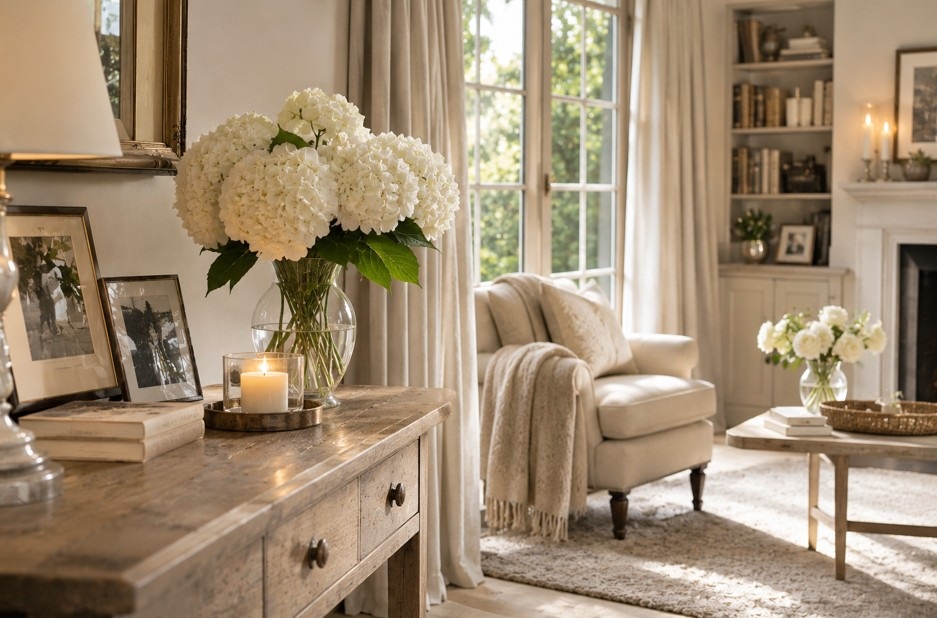
Have you ever looked around your home and realised that although your life has changed, everything around you has stayed exactly the same? The furniture is where it has always been. The photographs are still on display. The wardrobes hold clothes you no longer wear. Perhaps there’s a room you rarely enter, or a particular chair that carries memories of someone who is no longer there.
Nothing is necessarily wrong with any of it. Yet something doesn’t feel quite right. You may have spent months, even years, working through a difficult life experience. You’ve grown, your priorities have shifted, and you’re beginning to understand yourself differently. But your home still reflects the life you had before everything changed. This is something we don’t talk about enough when discussing personal growth and rebuilding after adversity.
Sometimes, the life we’re trying to create needs space in the environment we’re still holding on to. And making that space isn’t always as straight forward as rearranging furniture. The home becomes a reminder of an interrupted future. Rooms you planned to renovate, projects he started, or spaces meant for growing old together can feel heavy with unlived plans.
Why We Hold On to the Spaces of Our Past
Our homes hold far more than possessions. They contain memories, routines, relationships, achievements, and the everyday details that make up our personal histories. A dining table might remind you of family celebrations. A bedroom may hold memories of a marriage. A home office might represent a successful career that no longer feels meaningful. These objects and spaces become connected to our sense of identity. When life changes unexpectedly, those connections can become even stronger.
After bereavement, keeping everything exactly as it was may provide comfort and continuity. Following divorce, familiar belongings might offer stability during uncertainty. An unchanged environment can feel reassuring. There’s no universal timetable for changing your surroundings after adversity. And there certainly isn’t a rule that says you must get rid of meaningful possessions to move forward. But it’s worth asking whether you’re keeping something because it still brings you comfort, or because changing it feels like leaving a part of your life behind.
Those are two very different experiences.
When Your Home No Longer Reflects Who You Are
One less obvious consequence of adversity is how much it can change our identity. You may still be the same accomplished, capable woman you’ve always been, but your priorities, values, and aspirations may have shifted. Perhaps professional success once dominated your life, but now you value peace and personal freedom.
Maybe your home was designed around a busy family life, and you’re learning to enjoy a quieter household. Perhaps you’re rediscovering interests and ambitions that were set aside for years. Yet your physical environment hasn’t caught up. Consider a woman who has spent decades putting everyone else’s needs first. Her home may be beautifully maintained, but not a single corner feels entirely her own. Or a woman who has lost her spouse and finds herself living among possessions that represent a shared life she deeply treasures.
Neither woman needs to erase her past.
But both deserve a home that accommodates who they are becoming. Your surroundings don’t have to remain a permanent reflection of a chapter that has ended. They can hold your history while making room for new experiences.
The Emotional Difficulty of Letting Things Change
One of the biggest misconceptions about creating a fresh start is that it requires getting rid of the old. It doesn’t. In fact, rushing to make major changes before you’re emotionally ready can create additional distress.
I understand how complicated the relationship between memory, loss, and home can become. After losing my husband, I came to recognise that rebuilding life involves more than adjusting to different circumstances. It also involves understanding how your relationship with familiar places, routines, and belongings may change.
An object that seems ordinary to one person can hold extraordinary meaning. A piece of furniture may represent years of shared conversations. A photograph may bring both gratitude and sadness. That’s why I believe changing your home should begin with understanding, not decluttering.
Before deciding what stays or goes, ask yourself: Does this still bring me comfort? Am I keeping it because I love it, or because I feel obligated to? Does this space support how I want to live today?
You may discover that some things deserve to remain exactly where they are. Others might be better appreciated in a different room, stored carefully, or passed on when you’re ready. And some things may no longer have a place in the life you’re creating; none of these decisions needs to happen overnight.
Creating Space for the Woman You’re Becoming
So how do you begin making your home feel aligned with your present life? Be intentional and start small. Intentional design starts with purpose. In your second season every item in your home should serve a real function or hold personal meaning.
First, notice how your home makes you feel.
Walk through your rooms without focusing on whether they’re fashionable, tidy, or beautifully decorated. Instead, pay attention to your emotional responses. Where do you feel comfortable? How do you want to feel in this space? Is there somewhere you’d like to spend more time but rarely do?
Second, identify what your current life needs.
Perhaps you need a quiet place to read, a welcoming space to entertain friends, or a bedroom that genuinely encourages rest. Your needs today may be very different from those you had ten years ago.
Third, make one meaningful change.
You might reposition a favourite chair near the window, replace heavy curtains to introduce more natural light, or place fresh flowers on a table you pass every morning. Sometimes, even a modest change can help a familiar room feel more suited to your present life.
Finally, keep what matters.
Creating a home that supports your future doesn’t require removing every reminder of your past. A treasured photograph, an inherited piece of furniture, or a meaningful collection can sit beautifully alongside new choices. The intention is not to create a different identity through decoration. It’s to make your environment more supportive of the person you already are and the life you want to live.
Your Home Is Part of Your Second Season
When I speak about The Second Season®, I’m not simply referring to starting again from scratch after adversity. I’m talking about consciously rebuilding a life that reflects your values, well-being, purpose, and aspirations. Your environment has an important role in that process. Through my experience in wellbeing interior design and holistic well-being strategy, I know how closely our homes are connected to the way we live.
When a home aligns with the life inside it, it transforms from a static physical structure into a dynamic container for well-being, emotional safety, and personal growth.
This core philosophy drives my methodology The Second Season Home™, an approach that connects our physical environments with how we intentionally show up in the world. While personal growth happens within us, our environment can support the changes we’re making. And sometimes, recognising that your home no longer reflects your current needs is the beginning of an important conversation about what you want next.
You Can Honour Your Past Without Living Entirely in It
There is something worth remembering as you navigate your second season. You don’t have to choose between cherishing the life you’ve lived and creating space for the life ahead. Both can exist together. You can treasure your memories, preserve meaningful possessions, and still allow your home to change.
You can love the person you were while making room for the woman you’re becoming.
Begin with something as simple as moving a favourite chair, or bringing a vase of fresh flowers or a house plant into a room that hasn’t felt quite right for a long time. These changes won’t fix everything you’ve been through, and that’s okay. Your present life deserves care, too. Your past is part of your story, but it doesn’t have to dictate every corner of your surrounding. If you’re looking for gentle ways to intentionally rebuild your life and home I’d love to have you join my free newsletter.
Is Your Home Reflecting the Life You’re Ready to Create?
As you rebuild after adversity, your home deserves a seat at the table.
Through The Second Season Home™, I blend my interior design background with holistic well-being strategies to help clients align their spaces with who they are becoming. As an integral pillar of The Second Season®, this approach explores how the physical environment deeply supports an evolving identity, emotional well-being, and personal aspirations after a major life transition. True alignment isn’t just about mindset or achievements; it is actively shaped by the everyday spaces where life unfolds.
Ready to redesign your next chapter? Explore The Second Season® and discover how to rebuild a life and a home that reflect the woman you’re becoming.
Enjoyed this article? Go ahead and share it with others:
Discover more...
Mindset
Nutrition
science
wellbeing
View all articles
Habit Hacks For High Performance
Sign up now to grab your free Habit Hacks guide & take your performance to the NEXT LEVEL!
Download your guide


Personal Well-Being Masterclass
Subscribe to the waiting list for my highly anticipated personal well-being masterclass.
Join the waitlist

Check out these FREE resources
Thank you!
You have successfully joined our newsletter list.
Eunice De Campi is a multi-passionate founder and creative dedicated to helping women rebuild their lives and businesses after adversity. Based in the UK, works internationally.
Copyright @ 2026 Eunice De Campi International
Terms | cookie policy | disclaimer | Privacy | brand & site by lhc
INTERCONNECTED
Sign up and get inspiration, practical tips, and exclusive resources delivered to your inbox every month.
Monthly Newsletter


