

Dive into a collection of insights, guidance, and inspiration written to support you on your transformation journey. These articles are here to spark new perspectives, empower your self-belief, and remind you: change is possible, and courage, clarity & joy are within reach.
Explore. Reflect.
Lean into your REINVENTION.
Aligned mindset & holistic well-being articles
Wellbeing
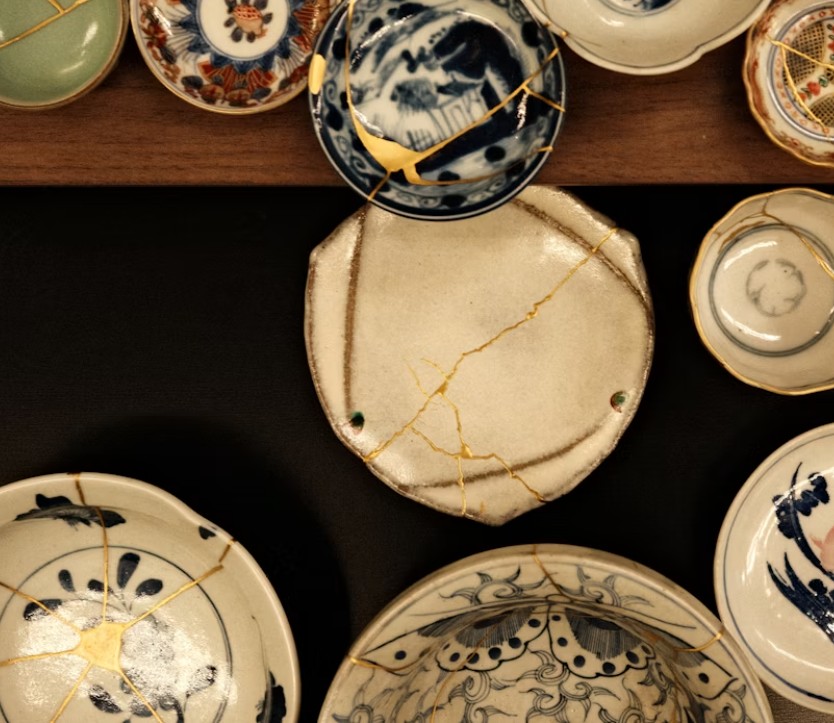
The science of neuroplasticity after adversity and what actually happens in your brain when rebuilding your life. In this piece, I want to explore why that fear, though completely understandable, is not what the science says. Because the same capacity that lets hardship change you is the exact capacity that lets you change again. And understanding how it actually works is not just reassuring; it’s practical. It tells you what to do.
Nature built your brain to rebuild itself
Many hard seasons harbour a quiet, unspoken fear because speaking it aloud feels like giving up. We fear that the adversity damaged us permanently and that these struggles now define us. We fear that something rewired us for the worse, and no one can rewire us back.
Scientists once believed that the adult brain remained essentially fixed, locked its structure by a certain age, and declined slowly from there. They were wrong. One of the most hopeful discoveries in modern neuroscience proves why
Your brain is plastic. Not fragile-plastic, mouldable-plastic. Throughout your entire life, it physically reshapes itself in response to what you repeatedly experience, think, and do. Connections between neurons strengthen with use and weaken with neglect. Whole pathways get reinforced into highways or left to grow over. This is neuroplasticity, and it is not a metaphor -it is a structural, physical property of the organ inside your skull.
Here is the part that matters for you. Adversity used this same property against you. Under prolonged stress, your brain did exactly what it’s designed to do: it adapted to the environment it was in. It got very good at scanning for threat, at bracing, at expecting the next blow. Those weren’t malfunctions. They were your brain efficiently learning the world you were living in. The flinch is a trained response, not a broken one.
Which means it can be retrained again. The mechanism that installed the pattern is the mechanism that can rewrite it. You are not stuck with the version of your brain that adversity shaped. You are holding the very tool that shaped it.
Why the rebuild feels so hard at first and why that’s the point
If your brain can rewire, people reasonably ask, why doesn’t it just snap back? Why does rebuilding feel like pushing a boulder uphill?
Because the old pathways are, quite literally, well-worn. The stress response you built over months or years is a highway fast, automatic, effortless to travel. The new response you’re trying to build is a footpath through underbrush. Every time you choose the new way, the calmer interpretation, the steadier action, the belief that you can, you’re walking that footpath again, and each pass wears it slightly deeper. It feels effortful precisely because it is new construction. The difficulty isn’t evidence you’re failing. It’s evidence you’re rebuilding.
This reframes the whole experience of a hard rebuild. The exhaustion of choosing the new response over and over isn’t wasted at all it’s the actual physical work of laying down new neural structure. You are not spinning your wheels. You are grading a road, one deliberate pass at a time, and roads don’t appear finished on the first walk.
What this means you should actually do
The science doesn’t just comfort it prescribes. If pathways strengthen through repetition, then rebuilding isn’t about insight or intensity. It’s about frequency. One profound breakthrough changes less than a small, repeated practice. The brain rewards what you do often, not what you feel deeply once.
So the practical takeaways are almost stubbornly simple. Small repeated actions beat rare grand gestures, because repetition is the literal currency of neural change. Consistency matters more than intensity, which is why the woman who does one modest thing daily rebuilds more durably than the one who overhauls everything for a fortnight and burns out. And progress will feel invisible long before it feels real only because pathways deepen gradually, you’ll be genuinely changing well before you can feel that you have. The absence of a dramatic aha is not the absence of change. It’s just what real change feels like from the inside: quiet, gradual, and only obvious in hindsight.
There’s a strange grace in this. The same neuroplasticity that made you vulnerable to being changed by hardship is the guarantee that hardship doesn’t get the last word. You were not permanently rewritten. You were temporarily reshaped by a brain doing exactly what brains do and that same brain is, right now, entirely capable of reshaping toward the life you’re building next. Not by force, by intetentional repetition. One deliberate pass at a time.
Your Second Season isn’t a smaller version of the life you had. It’s a wiser one. Explore the Second Season methodology here to rebuild your life and business on a foundation and nervous system that actually hold.
My Final Thoughts
I think Kintsugi serves as the perfect metaphor for the science of neuroplasticity after adversity. Kintsugi is the practice of repairing broken pottery. Instead of hiding the fractures, the artisan highlights them, making the repaired piece stronger and more beautiful than the original.
Neuroscience proves that our brain undergoes a strikingly identical process when recovering from trauma, stress or adversity.
The Second Season is almost here. Join the waitlist before limited spots fill up.
Category:

The Comparison Trap: Why Everyone Else Seems to Have Recovered Faster Than YouYou’re scrolling, at a dinner, or reading someone’s polished little update, and there it is again. Someone who went through something like what you went through seems fine. Better than fine. Rebuilt, glowing, three steps ahead. And a small, ugly voice you’d never say out loud asks: Why not me? Why am I still here, still in it, when she’s clearly moved on? The comparison trap: Why does everyone else seem to have recovered faster than you?
Let me say the kind thing first, because you need it before the true thing. You are not behind. There is no behind. But I understand exactly why it feels like there is.
The recovery you’re comparing yourself to isn’t real
Here’s what nobody says about the woman who seems to have recovered faster than you. You are watching her outside and comparing it to your inside. You know every 2 AM doubt you’ve had, every morning you couldn’t face, every private wobble, and you’re measuring all of that against her highlight. Against the version of herself she chose to show.
It isn’t a fair fight. It was never going to be.
And here’s the part that should genuinely loosen something in your chest: some of the fastest-looking recoveries are the least real ones. There’s a particular trap that catches capable, high-achieving women especially hard, the pressure to look recovered before you actually are. To narrate the comeback story before you’ve lived it. To perform well because performing was always what you were good at. That woman three steps ahead? Some of them really have healed. And some of them are running the exact performance you’re tempted to run, and it will cost them later, when the polished version cracks and there’s nothing built underneath.
You’re not slow. You might just be doing the honest version. And the honest version always looks slower than the performed one right up until it lasts, and the performed one doesn’t.
Why “faster” was never the goal anyway
Somewhere along the way, you absorbed the idea that recovery is a race. That there’s a clock, and healing well means healing quickly. I want to gently pull that belief out by the root, because it’s making a hard thing harder.
There is no prize for the fastest rebuild. There is no medal for the woman who stopped grieving soonest. What actually matters, the only thing that matters, is whether what you build this time holds. And the things that hold are almost never the things built fast. Fast rebuilding is usually fear-based rebuilding, grabbing the nearest version of ‘okay’ so you can stop feeling the discomfort. Slow rebuilding is often the sound of someone doing it properly, letting the foundation set before they build on it.
You are not losing a race. You are refusing to build on wet concrete. Those look identical from the outside. They are opposites.
What to do with the comparison when it comes
It’s going to come again probably this week. So here’s what I want you to do with it, and it’s small. When you catch yourself measuring your inside against someone’s outside, don’t fight the thought or scold yourself for having it. Just name what’s actually happening: I’m comparing my full story to her edited one. That single sentence puts the ground back under you. It doesn’t make the feeling vanish, but it strips it of its authority because it’s true, and the comparison isn’t.
And then, if you can, do one quieter thing: turn the question around. Instead of why is she ahead of me,ask What did I survive that doesn’t show? The reason your recovery looks slow is often that yours was heavier. You’re not behind her. You’re carrying more up a steeper hill, and no one handed you a lighter load for the privilege of looking graceful about it.
You don’t need to recover faster. You need to recover true. And true has never once been measured against anyone but the woman you were yesterday.
Your second season isn’t a smaller version of the life you had; it’s a wiser one. Explore the Second Season pace that makes it last.
Category:

Success built your first season. Alignment will shape your second season. There was a time when success seemed easy to define. Work hard. Build a career. Create a beautiful home. Tick the boxes. Reach the milestones, and the list goes on. Now the future belongs to the women who live aligned.
For many accomplished women, that formula worked until it didn’t. Somewhere between promotions, responsibilities, family, expectations and relentless achievement, a quiet question begins to emerge.
Is this still the life I want?
It rarely arrives with fanfare. More often, it whispers during an early morning coffee, on a long drive home, or in the stillness after everyone else has gone to bed. You haven’t failed. In many ways, you’ve succeeded beyond what you once imagined. Yet something feels out of step. Not because you’ve lost your ambition. But because you’ve outgrown the life that ambition built.
Welcome to what I call The Second Season, season where success is no longer measured by what the world applauds, but by how deeply your life reflects who you truly are. And in this new era, one quality will matter more than any other:
Alignment.
We Have Been Taught to Chase More, Not Live Better
Modern culture celebrates acceleration. More productivity, visibility, possessions, and more achievement. The message is subtle but persistent: if something feels missing, the answer must be to do more. Yet many women discover the opposite. The harder they push, the further they drift away from themselves. You can have the title, the income, the beautiful house and the impressive résumé, while quietly feeling disconnected from your own life. This isn’t because you’re ungrateful. It’s because external success cannot compensate for internal misalignment.
When your daily choices no longer reflect your deepest values, life begins to feel heavy even when it looks enviable from the outside.
Alignment Is Different from Balance
For years, we’ve been sold the idea of work-life balance. As though life were a scale that simply needed equal weight on both sides. But balance is often temporary. Alignment is transformational.
Balance asks: How do I fit everything in? Alignment asks: What actually belongs in my life? That single shift changes everything. Alignment isn’t about squeezing more into your calendar. It’s about creating a life where your priorities, relationships, work, health, home and identity support one another instead of competing for your attention.
When you live aligned, decisions become clearer because they’re rooted in values rather than pressure. You stop asking what everyone else expects. You begin asking what truly matters.
The Cost of Living Out of Alignment
Many accomplished women become experts at functioning while disconnected. They keep delivering, keep smiling, and they keep performing. Yet beneath the surface, they often experience:
- Persistent exhaustion that rest alone cannot fix.
- Success that feels strangely empty.
- A constant feeling of rushing.
- Difficulty making decisions.
- Guilt, even when they’ve done enough.
- A sense that they’re living someone else’s definition of success.
These aren’t signs of weakness. They’re signals. Like the dashboard light in a car, they aren’t the problem; they’re pointing towards one. Something within you is asking to be heard. Ignoring it may allow you to continue for a while. Listening to it may change your life.
Alignment Requires Courage
Living aligned is not about escaping responsibility or abandoning everything you’ve built. It’s about becoming intentional. Sometimes that means saying no. Sometimes it means slowing down. Sometimes it means redefining success. And sometimes it means admitting that the woman who created your first season is not the woman meant to lead your second. I know this is easier said than done, but it’s true.
That can feel uncomfortable. Because growth often asks us to let go of identities that once served us well. But every meaningful transformation begins with honesty. Not the honesty you offer others. The honesty you offer yourself.
The Six Pillars of an Aligned Life
Through my work with women navigating their Second Season, I’ve observed that alignment is not a single decision; it is cultivated across every area of life.
1. Aligned Identity
Instead of asking, Who do people expect me to be?, ask: Who am I becoming? Your identity should evolve as your life evolves.
2. Aligned Well-being
Your body is not a machine designed for endless output. It is your lifelong home. Rest, nourishment, movement and emotional well-being are not rewards for productivity. They are the foundation that makes meaningful work possible.
3. Aligned Relationships
Not every relationship is meant to accompany every season. The people around you should support your growth, not require you to shrink to remain comfortable. Healthy relationships leave room for authenticity.
4. An Aligned Home
Your environment quietly shapes your thoughts, habits and emotions every day. A home should restore your energy rather than deplete it. It should reflect the woman you are becoming, not merely the life you’ve accumulated. When your surroundings support your values, daily life feels lighter and more intentional.
5. Aligned Purpose
Purpose is not always found through dramatic reinvention. Often, it emerges when you stop performing and start paying attention to what consistently brings meaning, contribution and joy. Purpose grows where authenticity is allowed to flourish.
Aligned Finance
Your relationship with money is part of your relationship with yourself.
For many accomplished women, financial success has been a measure of achievement, but true financial alignment goes deeper than income or accumulation. It is about creating a relationship with money that supports your freedom, values, choices, and the life you genuinely want to experience.
Aligned Finance means moving from financial pressure to financial intention. It means understanding what you have built, making conscious decisions about what you protect, what you grow, and what you release, so that your finances become a foundation for the future you are creating.
Because abundance is not simply having more. It is having the freedom to live in a way that feels deeply aligned.
The Future Is Changing
For decades, success was measured by visibility, status and relentless achievement. Increasingly, another way of living is emerging. People are beginning to value peace over performance. Depth over noise. Meaning over momentum. Intentionality over busyness. The women who will flourish in the years ahead will not necessarily be those who achieve the most. They will be the women who know themselves deeply enough to build lives that reflect their values.
They will choose clarity over comparison. Presence over perfection. Wholeness over appearances.
That is the future. And it belongs to women who live aligned.
Your Second Season Begins with One Question
Perhaps you’re reading this because something within you has been quietly asking for change.
Not necessarily a new career, a new city, or a completely different life. Perhaps what you need is a life that feels more like your own. A life where success and well-being no longer compete. A life where your home supports your peace, and your work reflects your values. Where your relationships nourish rather than drain you. Where ambition no longer comes at the expense of yourself. This is the invitation to The Second Season. Not to become someone else. But to become more fully yourself. Because the future doesn’t belong to the busiest women. Or the loudest. Or the most accomplished.
It belongs to the women who have the courage to live in alignment with who they truly are.
And perhaps… your Second Season begins today, join our waiting list. The future belongs to the women who live aligned.
Category:
You did not ask for this season. How to rebuild your life after loss and unexpected change, even when you do not know what you are building yet.
The Uncharted Territory
Maybe you lost someone. Maybe a relationship ended. Maybe the career you built, the identity you wore, the future you had mapped out quietly or suddenly stopped being available to you. And now you are here, in a place you never planned to be, trying to figure out how to move forward when you cannot yet see where forward is.
This is one of the hardest places a person can find themselves. Not because something has gone catastrophically wrong, but because nothing in your old toolkit quite works here. The strategies that served you before, the plans, the timelines, the drive to just push through, they do not translate into this terrain.
So what does?
That is what this blog post is about. Not a five-step fix. Not toxic positivity dressed up as wisdom. Just honest, grounded things that actually help when you are moving through a life you did not plan. How to navigate unexpected life changes.
Understand the Ground You Are Standing On
Before you can navigate a transition, it helps to know what kind of terrain you are actually in. There is a phase, and most people who have been through significant change will recognise it, that sits between what was and what is coming. The old life has ended. The new one has not yet taken shape. You are in the middle, and the middle has no clear landmarks.
This phase is disorienting by design. It is supposed to unsettle you, because what is being asked of you here is not to perform or produce but to shed. Old identities, old assumptions, old versions of what you thought your life was supposed to look like. That shedding takes time, and it rarely feels graceful while it is happening. The first thing that helps is simply naming it. You are not failing. You are not falling apart. You are in transition. And transition, by its very nature, is uncomfortable. That discomfort is not a signal to panic, it is a signal that something real is happening.
Stop Waiting to Feel Ready
One of the most common things my clients say in the middle of a life transition is: I will start moving when I feel more ready. When the grief lifts a little. When I have more clarity. When things settle down. When I have a new job.
But here is the truth: readiness rarely arrives before movement. More often, it arrives because of it. You do not need to have it figured out before you take a step. How to navigate unexpected life changes. You do not need to know what you are building before you pick up the first piece. The clarity you are waiting for tends to come through small, honest, imperfect actions, not before.
This does not mean rushing. It means being willing to move, even slowly, even uncertainly, without waiting for a green light that may not come until you are already on your way.
Grieve What Needs to Be Grieved
Transitions involve loss. Even the ones that are ultimately leading you somewhere better. The relationship. The career. The version of yourself you thought you would be by now. The future you had already started to picture. These things deserve to be grieved properly, not quickly, not efficiently.
Skipping grief does not make you stronger or more resilient. It makes you someone who is carrying unprocessed loss into the next chapter, your second season, where it will eventually show up uninvited. Grief is not the opposite of moving forward. It is part of how you move forward. Let it have its place. Let it be as messy and nonlinear as it actually is. You are not behind because you are still feeling it.
Anchor Yourself in What Is Still True
When everything shifts, it is easy to feel like you have lost yourself entirely. But you have not. Underneath the circumstances, underneath the loss and the uncertainty, there are things that are still fundamentally you. A value you have always held. A way of showing up in the world that has not changed. Something that still brings you a small measure of peace or meaning, even in a hard season.
Find those things. Stay close to them. They are your anchor while everything else is still finding its shape. You are not starting from nothing; you are starting from everything you have already lived, learned and survived.
Let People In
I hope you’re still reading. We are not designed to navigate significant life transitions alone. We need people who understand not to fix us or hand us answers, but to witness what we are going through and remind us that we are not invisible in it.
This might be a trusted friend. A professional. A community of people who have walked something similar. Whatever form it takes, do not make the mistake of thinking that needing support is a weakness. It is one of the most honest and courageous things you can do in a hard season, and trust me, here I’ve been there. Isolation makes everything harder. A real, seen, supported connection makes the unbearable more bearable and the possible more visible.
Trust That You Are Being Shaped, Not Broken
Here is something I have come to believe deeply, from my own experience and from walking alongside others through theirs: the seasons we do not plan are often the ones that shape us most profoundly.
Not because suffering is automatically good. It is not. But when life strips away the structure we built around ourselves, what remains is more real. More true. And from that more honest place, something new becomes possible, something that could not have emerged from the comfortable, planned version of your life. You do not have to see what that is yet. You do not have to know what you are building. You just have to stay in the process honestly, patiently, and with the quiet trust that you are not being undone.
You are becoming.
You Do Not Have to Do This Alone
If you are in this season right now, navigating grief, rebuilding after loss, standing at a crossroads with no clear map, I want you to know that there is a space being created specifically for you.
My Second Season Programme is a group coaching programme for successful women moving through significant life transitions. It is a structured, supported space to process what you have been carrying, reconnect with who you truly are, and begin moving toward your second season/next chapter with clarity, confidence, and intention, surrounded by a community of women who genuinely understand.
Stay tuned. If something in you is saying this is the right time, trust that instinct. This second season was never planned. Be the first to know, join the waitlist. Your second season is not the end of your story. It is the beginning of the most honest chapter yet. It’s about navigating unexpected life changes.
Category:
Sometimes a well-planned life can lead you somewhere you never expected to go. Life can throw curveballs, and these sudden critical events can turn our personal and work lives upside down in an instant. Understanding how these surprises affect our feelings, drives and actions is important. An unexpected outcome in life.
You did everything right.
You studied hard, made sensible choices, built a stable career, and stayed on track. You followed the plan, maybe your own plan, maybe one you quietly inherited from the expectations around you. Either way, you showed up, you worked hard, and you kept going.
And then one day, you looked up from all that doing and realised this is not where you thought you would end up. An unexpected outcome in life.
Not in a dramatic, everything-fell-apart way. Just in a quiet, unsettling way. Like walking into a room and forgetting why you came in, only the room is your life.
That moment can stop you completely.
The Plan Was Real. So Is This.
Here is something important to say first: the plan was not wrong. The years of effort were not wasted. The choices that brought you here were real, and they mattered. You were not foolish for following them.
But life has a way of moving underneath us while we are busy executing our strategy. Priorities shift. People change. Losses happen. What once lit us up quietly fades. And sometimes the very structure we built to protect ourselves becomes the thing that is keeping us small.
A well-planned life can deliver everything it promised: security, stability, a certain kind of success and still leave you with a feeling that something essential is missing. That is not ingratitude. That is honesty.
The Unexpected Outcome Is Not the Problem
We are conditioned to see unexpected outcomes as failures. Detours. Evidence that something went wrong.
But what if the unexpected outcome is not a breakdown, but a breakthrough, trying to get your attention?
Think about the people who discovered their true calling only after losing a job they thought they could not live without. Or the ones who found genuine peace only after a relationship they had planned their whole life around came to a sudden end. Or those who stepped into the most meaningful work of their lives precisely because the original plan stopped working.
The unexpected outcome is rarely the end of the story. More often, it is the beginning of the more honest one.
You Already Have the Answer
Here is what I know from working with people through life’s most disorienting crossroads, including mine: the confusion you feel in the face of an unexpected outcome is not a sign that you are lost. It is a sign that you are paying attention.
Something in you already knows that this moment is significant. Something in you is asking a question you have been afraid to answer.
What do I actually want?
That question can feel dangerous when you have spent years building a life around a different answer. But it is also the most important question you will ever ask yourself, and you are the only one who can answer it.
No coach, no mentor, no perfectly curated plan can tell you what your life is supposed to mean. That knowledge lives in you. It always has. Sometimes it just takes an unexpected outcome to create enough space for you to hear it.
What to Do When You Are Here
If you are standing in the middle of an unexpected outcome right now, here are a few things worth sitting with.
Give yourself permission to be unsettled. You do not need to immediately reframe this into something positive. It is okay to feel disoriented. The disorientation is part of the process, not a problem to fix.
Resist the urge to rebuild the old plan immediately. The instinct when things feel uncertain is to rush back to the familiar. But this moment is inviting you to pause before you do. What you rebuild next deserves to come from a more honest place than urgency.
Ask what this has revealed, not just what it has taken. Unexpected outcomes always carry information. They show you what you were holding onto too tightly. They show you what you actually value when the structure falls away. They show you who you are underneath the plan.
Trust that you are more capable of navigating this than it feels like you are right now. You have already moved through difficult things. You have already adapted, recovered, and rebuilt. This is not the first time life has surprised you, and you have not yet failed to find your way through.
The Life That Wants to Emerge
A well-planned life is not the same as a fully lived one. The plan is a map, useful and necessary, but the territory of your actual life is always bigger, messier, and more interesting than any map can capture.
When an unexpected outcome arrives, it is an invitation to stop looking at the map and start looking at the ground beneath your feet. To ask not just where you were trying to go, but where you actually are and what might be possible from here.
You do not need a new plan right away. You need presence. Honesty. A willingness to stay with the question a little longer than is comfortable.
Because the life that wants to emerge from this moment is not something that needs to be forced or figured out all at once. It needs to be allowed. And that begins with trusting that you are not the plan, not the outcomes, not the external markers of success; you are the one who holds the answer.
You always were.
Category:
You thought you were doing better, and then one Tuesday morning, out of nowhere, it hit you again, the weight of it, the absence, the ache, and suddenly it felt like you were back at the very beginning, but you’re not back at square one. This is how grief actually works.
Although it can feel that way. And that feeling is one of the most confusing, isolating parts of grief that almost nobody talks about honestly. Grief is not a straight line. It never was. Understanding why can be the difference between surviving it and being consumed by it.
The Myth of the Stages
Where the idea came from
Most of us grew up hearing about the five stages of grief: denial, anger, bargaining, depression, and acceptance. The psychiatrist Elisabeth Kübler-Ross developed this model in 1969. It was never meant to be a roadmap for how grief should unfold.
She observed patterns which she noticed in terminally ill patients facing their own deaths. Somewhere along the way, it became a prescription.
The problem is that prescriptions for grief are dangerous. When you believe grief should move through predictable stages, you start measuring yourself against a standard that was never designed for you. And when you inevitably don’t match it, you conclude there is something wrong with you.
There isn’t.
And in 2019, David Kessler, the grief expert, added the sixth stage of grief, Finding Meaning, in his book of the same name. In this book, David offers a perspective on how grief can be transformed into meaning, which in turn leads to healing. Remember, grief is personal, and it must be experienced to be understood.
What grief actually looks like
Grief is better understood as waves than stages. Some waves are massive and knock you off your feet. Others are small and manageable. Some arrive when you expect them on anniversaries, milestones, and holidays. Others come from nowhere: a smell, a song, a stranger who laughs the way they did, etc.
Researchers now describe this as the oscillating nature of grief. You move between loss-orientation, facing the grief directly, and restoration-orientation, rebuilding your life and sense of self. Both are necessary. Both are healthy. Neither cancels the other out. Grief is not linear, and what to do when it comes back.
Why We Try to Rush It
The social pressure to ‘move on’
Society is deeply uncomfortable with grief. After a socially acceptable mourning period usually measured in weeks, sometimes in months, there is enormous pressure, often unspoken, to return to normal. To be okay. To stop being sad in ways that make other people uncomfortable.
This pressure can come from well-meaning friends and family. It can come from workplace culture. It can come from the internal belief that needing too long means you’re weak or broken. Whatever its source, the effect is the same: you learn to perform wellness before you’ve actually arrived there.
The cost of the performed healing
When you rush grief or are rushed through it, you don’t skip it. You defer it. Grief has a way of re-surfacing eventually, often in disguised forms: anxiety, numbness, overworking, disconnection, short tempers, or a vague sense that something is permanently missing. The body and mind will always find a way to process what was never allowed to be felt. Grief is not linear, and what to do when it comes back.
Allowing grief to be non-linear is not wallowing. It is not a weakness. It is the only honest, natural and sustainable way through.
What to Do When the Wave Comes Back
Name it without judgement
When grief resurfaces unexpectedly, the first instinct is often to fight it. To tell yourself you shouldn’t be feeling this, that you were doing so well. Instead, try naming it simply and without judgement: ‘A wave is here.’ That’s all. You don’t need to analyse it or assign meaning to its return. You just need to acknowledge it.
Let it move through
Grief that is resisted tends to persist. Grief that is allowed is felt fully, however painful, and tends to pass. This doesn’t mean you have to be consumed by it. It means creating small windows of time when you let yourself feel what you feel, without distraction or apology. Even fifteen minutes of genuine presence with the emotion can release what hours of suppression cannot.
Return to your anchors
After the wave, you need anchors, those things that ground you in the present and remind you that life continues. These might be people, places, routines, or practices. They don’t need to be dramatic. A morning walk, a cup of tea, a phone call with someone who loves you. Anchors don’t erase the grief. They hold you steady while it passes.
A Word on Time
People say time heals. It’s not quite right. What time does it give you more experience, more context, and more distance? Healing, the actual integration of loss into a life that still has meaning, is something you actively participate in. Time is the container. You are the work.
Whenever the grief returns, even in smaller waves, remember it’s not a setback. This is not evidence that you are broken or stuck. This is grief doing what grief does.
And you show up for yourself through another wave; that is exactly what healing looks like. I cover all this in my 1:1 coaching programme, which I designed specifically for high-achieving women who’ve lost loved ones. You can explore other ways we can work together here.
Category:

It’s not the initial shock, not the visible grief, nor even the rebuilding. It’s the space in between. The moment where everything has happened, but nothing makes sense. This is the stage of adversity no one talks about, and why you feel stuck, lost and unable to think clearly. This is the moment in adversity that no one prepares you for. The void phase: why you feel stuck, lost, and unable to think clearly.
The Void Phase
This is where your mind refuses to compute what your life has become. Where clarity disappears. Where your thoughts feel heavy, slow, or simply absent. You try to think, plan, or even imagine a future, but your brain won’t cooperate. This isn’t failure. This is your nervous system protecting you. The void phase is why you feel stuck, lost, and unable to think clearly.
In The Void, your brain is overwhelmed. It downregulates to survive. What feels like “being stuck” is often cognitive shutdown, a response to emotional overload. And here’s the truth most people miss: You are not meant to figure your life out at this stage, just go with the flow. The void phase can be confusing, which is why you feel stuck, lost, and unable to think clearly.
You are meant to stabilise, but how do you move forward when you can’t think clearly? Don’t leap. You anchor.
This is how you can start:
1. Reduce the pressure to understand everything.
Clarity will come later. For now, focus on what is manageable today.
2. Return to the body.
When the mind is foggy, the body becomes your compass. Gentle movement, breathwork, or even sitting in stillness helps regulate your system.
3. Simplify decisions.
This is not the season for big life choices. Protect your energy by minimising the decisions you have to make.
4. Create micro-structure.
Small, predictable routines rebuild safety. Think: wake, eat, walk, rest and repeat.
5. Borrow belief.
If you cannot see your future, trust that your current state is temporary. This void phase is a bridge, not a destination.
You don’t have to make sense of everything on your own.
If you’re finding yourself in this ‘in-between’ space and craving gentle guidance, Second Season, my programme launching soon, is a journey created for moments exactly like this, where healing comes before clarity, and small steps matter more than big leaps.
The Void Phase is uncomfortable because it feels like nothing is happening. But something is. You are recalibrating. Processing. You are quietly preparing for the next version of your life.
Even if you can’t see it yet.
Stay tuned so you can explore it when you’re ready. In the meantime, you can explore other ways we can work together here
Category:

When life breaks open, there are moments when everything falls apart, when the world goes strangely quiet. The initial shock has passed. The messages slow down. People assume you’re “doing better.” But internally, something deeper is happening. You are standing in a space between who you were and who you are becoming. And this is the part no one really prepares you for.
Not the grief itself, burnout, divorce, diagnosis or the identity collapse.
But what comes after? The quiet rebuilding.
The Season After the Storm
When life breaks open, the first phase is often survival.
You move through the days as best as you can. Doing what needs to be done. You carry responsibilities even when your energy feels depleted. But eventually, something shifts. The world continues to move, and slowly you begin to notice deeper questions rising within.
Questions that are impossible to ignore, for example:
What does my life look like now?
Who am I becoming?
What truly matters to me now? And how do I move forward?
These are not surface-level questions. They are identity questions; they signal the beginning of a new season.
The Uncomfortable Space Between Lives
Many women describe this phase as a feeling of being suspended between two lives. The old life has ended. But the new one hasn’t fully taken shape yet. You are no longer the woman who existed before the loss, the burnout, the divorce, or the diagnosis. Yet you are still rediscovering who you are now.
It can feel unsettling. Sometimes lonely. But it is also deeply transformative.
This period can take up to a few years everyone is different, because in this in-between space, something powerful happens:
You begin to see your life more clearly.
The expectations you once carried. The roles you played. The pace you lived at. The capabilities you had. You start questioning things that once felt normal. And slowly, almost quietly, your priorities begin to shift.
Why Many Women Try to Rush This Season
In the world we live in today, there is often pressure to “bounce back.”
To move forward quickly, rebuild life exactly as it was before. To carry on as life goes on. But the real transformation rarely works that way. When life breaks open, it often reveals parts of our lives that were misaligned long before the crisis occurred.
Burnout may expose years of overgiving.
Divorce may reveal unmet needs.
Grief may bring clarity about what truly matters.
These realisations take time to integrate. And yet this slower season is often where the most meaningful growth occurs. Not through dramatic reinvention. But through quiet reflection. Through asking better questions. Through allowing yourself the space to evolve.
The Role Our Environment Plays in Rebuilding
Our homes are reflections of who we are and the lives that we have lived. These environments take on a new significance for those of us who are coping with grief through the loss of a loved one, divorce, unexpected diagnosis, or a significant life change, as we are surrounded by objects and spaces that retain the memories of a former time. However, redesigning our home can be a powerful and hopeful step that helps us transition into a new season of life, as we move through the healing process.
After my husband passed away, I realised something that many women overlook. The way we had been living no longer reflected the life I was stepping into. The rhythms of the home belonged to a different chapter. The spaces held memories of a life that had changed forever.
Our homes are not neutral spaces. And as someone who had spent years designing living and working spaces for clients, I knew the important role that environments play in our daily lives. They influence how we feel. How we think. How we process change. During major life transitions, our environment can either support our healing or quietly hold us in the past. Sometimes the smallest shifts can recreate space for something new. I see my home as my silent partner in my healing process, and I hope you do too.
Rearranging furniture in a room. A corner redesigned. A new rhythm within the home. These are not just aesthetic changes; they are symbolic ones for your sacred space. They signal that life is evolving and that we are allowed to evolve with it. I share this in my 1:1 coaching sessions, where I guide driven, high-achieving women to intentionally redesign their homes to support the season they are in, and to intentionally develop sustainable strategies for their lives and businesses.
The seasons of Life, and change is inevitable.
One of the ideas that has shaped my thinking the most is this: Life is seasonal. Just as nature moves through cycles of winter, spring, summer, and autumn, our lives also move through seasons of expansion, rest, loss, and renewal. Yet many of us try to live as though everything should remain constant. We build lives designed for stability. But growth rarely follows a straight line. There are seasons of deep clarity. And seasons of uncertainty. Seasons where everything feels aligned. And seasons where life quietly dismantles what no longer serves us. None of these seasons is a mistake. They are part of the human experience.
The Beginning of a Different Kind of Life, When Life Breaks Open
When life breaks open, it often invites us to rebuild with greater intention.
Not by recreating the past. But by designing a life that supports who we are now. For some, this might mean redefining success. Changing how you spend your time. Letting go of roles that no longer fit. Or creating an environment that nurtures the life you are rebuilding. These shifts rarely happen overnight. But over time, when you prioritise your well-being, something beautiful begins to emerge:
Clarity. Confidence. Strength. A deeper understanding of what truly matters. And perhaps most importantly, a quieter but more grounded sense of self.
When Life Breaks Open, It’s A Gentle Invitation
If you find yourself in the in-between season right now, the space where life has broken open but the future still feels uncertain, know that you are not alone. This phase is not a sign that you are lost. It is often the very place where transformation begins.
In recent years, talking to other women and my own experiences led me to create The Seasons of Life Home Method™, a framework that explores how our environments and lives can evolve alongside the seasons we move through. Because when we learn to honour the season we are in, something shifts. We stop rushing. We stop comparing our timeline to others. And we begin to rebuild our lives in ways that are more intentional, more supportive, and more aligned with who we are becoming.
Sometimes life breaks open in ways we never expected. But within that opening lies the possibility of a life aligned and designed with deeper meaning. A life shaped not by circumstance alone, but by conscious choice. And that may be the beginning of something far more powerful than we ever imagined.
Category:

There are moments in life when everything you thought was solid suddenly isn’t. The ground shifts. The story changes. And the version of you that once knew exactly who you are… quietly disappears. For many high-achieving women, this is the season that no one prepares you for. When life breaks open is the season that redefines everything for you.
It arrives through grief. Through burnout that creeps in after years of holding everything together. Through a divorce that dismantles the life you carefully built. Through a diagnosis that redraws the map of your future. Or through an identity collapse, when you wake up one day and realise the life you’re living no longer fits who you’ve become.
I call it the season of Inner and Outer Realignment, when life breaks open and does not break down.
There is a difference. Because when life breaks open, everything hidden inside you begins to surface. The grief you postponed, the exhaustion you ignored, and the questions you were too busy to ask.
It is messy.
Uncomfortable.
And often deeply lonely.
But it is also the beginning of something most people never talk about. A profound redefinition of who you are.
Navigating Major Life Transitions: Grief, Burnout and Identity Shifts
What makes these seasons so disorienting is that they don’t just change circumstances. They change identity too.
You are no longer the wife. The partner. The person who once had a predictable future. You are no longer the woman who could carry endless responsibility without consequence.
Burnout strips away the illusion of strength.
Grief dismantles certainty.
Divorce rewrites belonging.
Diagnosis interrupts the illusion of control.
The Silent Collapse of the Old Life
And suddenly, the life you built no longer reflects the woman you are becoming. No one really tells you what to do at this moment. During major life transitions, our identity often shifts in ways we never expected.
Because society prefers quick recoveries and inspirational endings. But the real transformation rarely looks neat. Often, it begins in the quiet moment when you sit in your own home and realise something startling. Everything has changed. The life around you no longer matches the life within you.
REDESIGNING YOUR HOME FOR MAJOR LIFE TRANSITIONS: When Your Home Environment Holds Your Past
After my husband passed away, I realised something that surprised me. The way we had been living the rhythms of the home, the spaces we used, the energy of the environment, no longer served the woman I was at that moment and the woman I was becoming.
The house still reflected a life that had ended. The routines belonged to a version of me that no longer existed. And as someone who had spent years as an interior designer, I couldn’t ignore the truth that became obvious to me.
Our environments are silent storytellers. But we rarely talk about this space that holds us while we’re healing.
They hold memories.
They hold identities.
They hold the life chapters of where we’ve been and how we’ve lived. But sometimes they also hold us in the past that no longer exists.
And when life breaks open, you begin to see everything differently.
The spaces you once loved feel unfamiliar. The structure of your life no longer makes sense. You start asking deeper questions:
Who am I now?
What kind of life do I want to create from here?
What direction do I take from here?
These questions rarely arrive during easy seasons. They arrive during the collapse, the difficult time.
The Hidden Gift of These Seasons
Here is the quiet truth I have come to believe.
The seasons that dismantle us are often the same seasons that invite us to redesign our lives with far greater intention. Not the life we inherited. Not the life we performed. But the life that genuinely aligns with who we are now.
Grief can deepen your capacity for meaning.
Burnout can force you to redefine success.
Divorce can reconnect you with independence.
Diagnosis can sharpen your clarity about what truly matters.
These seasons strip away illusion. And while that process is painful, it can also be incredibly clarifying.
Because when life breaks open, it creates space. The space to rebuild differently.
Space to honour the woman you are becoming.
Space to recreate a life that supports your emotional and spiritual well-being, not just your responsibilities. Space to rebuild the life and business you love.
Redesigning Life for the Season You’re In
One of the most important realisations I had during my own journey was this:
Life is seasonal. Just as nature moves through cycles of winter, spring, summer and autumn, we move through emotional and psychological seasons too. But most of us design our homes and our lives as if everything should remain the same forever.
We build structures for stability. Yet life inevitably changes. Loss happens. Growth happens. Transformation happens. And when it does, the environments we live in, physically and emotionally, must evolve with us. Not because something is wrong. But because something new is emerging.
When Life Breaks Open, Something New Begins
If you are in a season of grief, burnout, divorce, diagnosis or identity collapse, it may feel like life has fallen apart.
But what if something else is happening too?
What if this moment is not simply an ending, but an opening?
An opening to question old definitions of success.
An opening to redesign a life that reflects who you are now.
An opening to recreate environments both internally and externally that genuinely support your well-being.
Because when life breaks open, it does not just reveal pain. It reveals possibilities.
And sometimes the most powerful thing we can do is to pause, breathe, and begin asking a different question:
If I were redesigning my life for this season… what would it look like now?
This question is at the heart of the work I now share through my 1:1 coaching sessions. I guide high-achieving women to intentionally redesign sustainable strategies for their lives and businesses, and also redesign homes to support the season they are in following adversity.
Not the one they left behind. And not the one they feel pressured to rush towards by society. Because when we learn to honour our seasons, something remarkable happens. Life doesn’t just break open.
It begins to unfold.
The environments we live in quietly shape how we heal, think and rebuild our lives and businesses.
Category:

Most conversations about life management revolve around tools: better routines, sharper focus, stronger discipline, tighter boundaries. Planners, productivity systems, morning rituals. All useful, yet for many high-achieving women, something still feels off.
You’re doing “everything right,” but life still feels heavy. Decision-making feels draining. Small disruptions throw you off more than they should. Rest doesn’t quite restore you.
Here’s the uncomfortable truth we don’t talk about enough:
No life management system works without emotional strength beneath it.
Emotional strength isn’t a soft add-on to life management. It is the foundation.
Why Life Management Fails Without Emotional Strength
If life management were purely about structure, then the most organised people would also be the most fulfilled. But we know that isn’t true.
You can have:
- A perfectly planned week, and still feel overwhelmed
- Clear goals and still feel stuck
- Strong discipline, and still feel emotionally exhausted
Why? Because emotional capacity determines how well you can use structure.
When emotional reserves are low:
- Boundaries feel harder to maintain
- Decisions feel heavier than they should
- Time pressure feels personal
- Even small setbacks feel destabilising
Emotional depletion turns normal life demands into emotional stress.
The Nervous System: The Missing Link In Life Management
Here’s what most productivity conversations ignore: how to manage your emotions. Life management is a nervous system issue before it’s a time issue. Emotional strength is the quiet foundation of what I call true life management, not time management.
When your nervous system is dysregulated:
- Everything feels urgent
- Rest feels unproductive
- You default to overdoing or withdrawing.
- You manage life in survival mode.
Emotional strength management allows the nervous system to settle. From that settled place, priorities become clearer, boundaries feel more natural, and effort becomes more sustainable. This is why slowing down often creates better momentum than pushing harder, a paradox many high performers resist until burnout forces the lesson.
Emotional Strength Creates Internal Order
Emotional strength is the foundation of true life management. As someone with interior design experience, I see emotional strength the way I see a well-designed home. An organised space isn’t just about aesthetics; it’s about flow and functionality that enhance well-being, productivity, and emotional connection, and that tells a personal story.
Emotional strength creates the same effect internally:
- Thoughts become less cluttered.
- Decisions feel less dramatic.
- You stop over-managing what doesn’t matter.
- You conserve energy for what matters
Without emotional order, life feels noisy. With it, even busy seasons feel more navigable.
Why High-Achieving Women Especially Need This Shift
High-achieving women are often praised for their ability to cope well. Being strong. Holding it together. But coping isn’t the same as internal support. Many of the women I work with are incredibly capable yet emotionally overextended. They’ve mastered external management while neglecting internal capacity, and eventually, the gap shows up as burnout, numbness, unfulfilled or a quiet loss of joy. Emotional strength allows ambition to coexist with well-being without one cannibalising the other.
Building Emotional Strength Management Is a Practice, Not a Personality Trait
This is the hopeful part. Emotional strength isn’t something you either have or don’t. It’s something you build.
It grows when you:
- Create space to process rather than rush past emotions
- Learn to pause before reacting
- Honour rest as strategic, not indulgent
- Design your life to support your nervous system, not constantly override it
Small, intentional shifts compound, just as any other life management skill does.
The New Definition of “Being“
True life management isn’t a perfectly executed routine. It’s the ability to move through life with:
- Emotional steadiness
- Self-trust
- Sustainable energy
- Compassion for your own humanity
When emotional strength is present, life doesn’t need to be micromanaged. It flows with more ease, even when it’s challenging. And perhaps that’s the most refined form of well-being there is, not controlling life, but having the inner capacity to meet it. In my 1:1 coaching sessions, I guide women in designing sustainable strategies for their lives and businesses following adversity.
Stay tuned, you don’t want to miss my Refined Wellbeing introduction.
Category:
Habit Hacks For High Performance
Sign up now to grab your free Habit Hacks guide & take your performance to the NEXT LEVEL!
Download your guide


Personal Well-Being Masterclass
Subscribe to the waiting list for my highly anticipated personal well-being masterclass.
Join the waitlist


