
The science of neuroplasticity after adversity and what actually happens in your brain when rebuilding your life. In this piece, I want to explore why that fear, though completely understandable, is not what the science says. Because the same capacity that lets hardship change you is the exact capacity that lets you change again. And understanding how it actually works is not just reassuring; it’s practical. It tells you what to do.
Nature built your brain to rebuild itself
Many hard seasons harbour a quiet, unspoken fear because speaking it aloud feels like giving up. We fear that the adversity damaged us permanently and that these struggles now define us. We fear that something rewired us for the worse, and no one can rewire us back.
Scientists once believed that the adult brain remained essentially fixed, locked its structure by a certain age, and declined slowly from there. They were wrong. One of the most hopeful discoveries in modern neuroscience proves why
Your brain is plastic. Not fragile-plastic, mouldable-plastic. Throughout your entire life, it physically reshapes itself in response to what you repeatedly experience, think, and do. Connections between neurons strengthen with use and weaken with neglect. Whole pathways get reinforced into highways or left to grow over. This is neuroplasticity, and it is not a metaphor -it is a structural, physical property of the organ inside your skull.
Here is the part that matters for you. Adversity used this same property against you. Under prolonged stress, your brain did exactly what it’s designed to do: it adapted to the environment it was in. It got very good at scanning for threat, at bracing, at expecting the next blow. Those weren’t malfunctions. They were your brain efficiently learning the world you were living in. The flinch is a trained response, not a broken one.
Which means it can be retrained again. The mechanism that installed the pattern is the mechanism that can rewrite it. You are not stuck with the version of your brain that adversity shaped. You are holding the very tool that shaped it.
Why the rebuild feels so hard at first and why that’s the point
If your brain can rewire, people reasonably ask, why doesn’t it just snap back? Why does rebuilding feel like pushing a boulder uphill?
Because the old pathways are, quite literally, well-worn. The stress response you built over months or years is a highway fast, automatic, effortless to travel. The new response you’re trying to build is a footpath through underbrush. Every time you choose the new way, the calmer interpretation, the steadier action, the belief that you can, you’re walking that footpath again, and each pass wears it slightly deeper. It feels effortful precisely because it is new construction. The difficulty isn’t evidence you’re failing. It’s evidence you’re rebuilding.
This reframes the whole experience of a hard rebuild. The exhaustion of choosing the new response over and over isn’t wasted at all it’s the actual physical work of laying down new neural structure. You are not spinning your wheels. You are grading a road, one deliberate pass at a time, and roads don’t appear finished on the first walk.
What this means you should actually do
The science doesn’t just comfort it prescribes. If pathways strengthen through repetition, then rebuilding isn’t about insight or intensity. It’s about frequency. One profound breakthrough changes less than a small, repeated practice. The brain rewards what you do often, not what you feel deeply once.
So the practical takeaways are almost stubbornly simple. Small repeated actions beat rare grand gestures, because repetition is the literal currency of neural change. Consistency matters more than intensity, which is why the woman who does one modest thing daily rebuilds more durably than the one who overhauls everything for a fortnight and burns out. And progress will feel invisible long before it feels real only because pathways deepen gradually, you’ll be genuinely changing well before you can feel that you have. The absence of a dramatic aha is not the absence of change. It’s just what real change feels like from the inside: quiet, gradual, and only obvious in hindsight.
There’s a strange grace in this. The same neuroplasticity that made you vulnerable to being changed by hardship is the guarantee that hardship doesn’t get the last word. You were not permanently rewritten. You were temporarily reshaped by a brain doing exactly what brains do and that same brain is, right now, entirely capable of reshaping toward the life you’re building next. Not by force, by intetentional repetition. One deliberate pass at a time.
Your Second Season isn’t a smaller version of the life you had. It’s a wiser one. Explore the Second Season methodology here to rebuild your life and business on a foundation and nervous system that actually hold.
My Final Thoughts
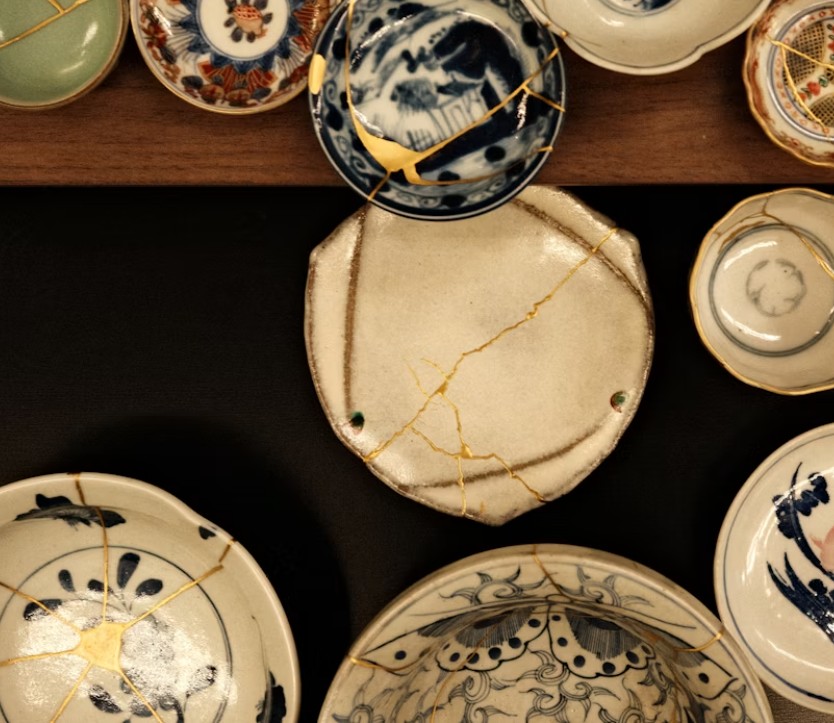
I think Kintsugi serves as the perfect metaphor for the science of neuroplasticity after adversity. Kintsugi is the practice of repairing broken pottery. Instead of hiding the fractures, the artisan highlights them, making the repaired piece stronger and more beautiful than the original.
Neuroscience proves that our brain undergoes a strikingly identical process when recovering from trauma, stress or adversity.
The Second Season is almost here. Join the waitlist before limited spots fill up.
Enjoyed this article? Go ahead and share it with others:
Discover more...
Mindset
Nutrition
science
wellbeing
View all articles
Habit Hacks For High Performance
Sign up now to grab your free Habit Hacks guide & take your performance to the NEXT LEVEL!
Download your guide


Personal Well-Being Masterclass
Subscribe to the waiting list for my highly anticipated personal well-being masterclass.
Join the waitlist

Check out these FREE resources
Thank you!
You have successfully joined our newsletter list.
Eunice De Campi is a multi-passionate founder and creative dedicated to helping women rebuild their lives and businesses after adversity. Based in the UK, works internationally.
Copyright @ 2026 Eunice De Campi International
Terms | cookie policy | disclaimer | Privacy | brand & site by lhc
INTERCONNECTED
Sign up and get inspiration, practical tips, and exclusive resources delivered to your inbox every month.
Monthly Newsletter


