

Dive into a collection of insights, guidance, and inspiration written to support you on your transformation journey. These articles are here to spark new perspectives, empower your self-belief, and remind you: change is possible, and courage, clarity & joy are within reach.
Explore. Reflect.
Lean into your REINVENTION.
Aligned mindset & holistic well-being articles

All Posts
“Starting over” is the phrase everyone reaches for after a life falls apart. It sounds hopeful. But look closely: it carries a quiet lie- that you’re back at zero, that everything before was wasted, that you’re rebuilding the same thing with the same blueprint, just more carefully this time.
I’ve come to believe that starting over is one of the most misunderstood ideas we carry into our second season. Because there is a difference, a profound one, between starting over and starting aligned. A Second Season isn’t starting over. It’s starting aligned. And the difference between those two is the difference between repeating your past and transcending it. Designing your second season on purpose is the difference between starting over and starting aligned.
The Myth of the Blank Slate
Starting over assumes that what came before must be erased. That the way forward is to wipe the page clean and begin again, as though the years you lived, the wisdom you earned and the self you became were somehow obstacles to your future.
But you are not a blank slate. You never will be again. And that is not a loss. It is the whole point.
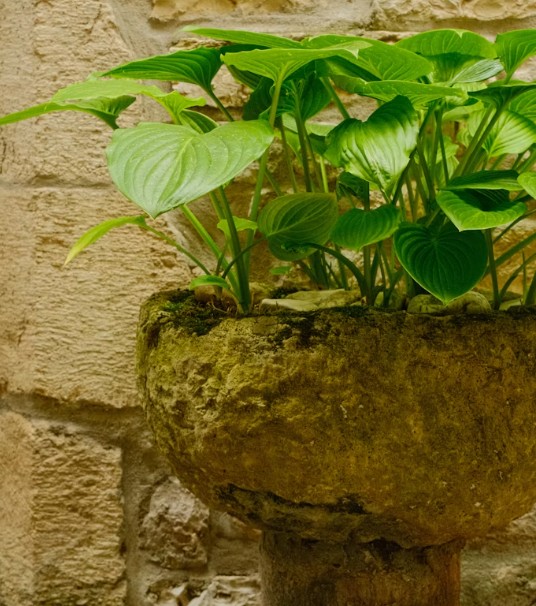
Nature understands this. Spring does not arrive by pretending winter never happened. The soil that feeds new growth is made from everything that fell, the leaves, the branches, the seasons that ended. Nothing is wasted. Everything becomes ground.
Your second season is not a do-over of your first. It is what grows from it.
When we try to start over, we often end up rebuilding the same life in a new location, with the same patterns, the same striving, and the same quiet sense that something is missing. We change the scenery but not the story. Starting over is often a reaction, a way of getting as far from the pain as possible, as fast as possible. And reactions, however understandable, rarely lead us home. The nervous system always remembers.
What It Means to Start Aligned
Autopilot simply rebuilds your old life in a new costume, the same exhaustion, just a different title. Intentional rebuilding does something much harder and better: it integrates the brutal lessons of adversity into the foundation of your future success. This is the core design principle, and the strategic blueprint of The Second Season.
Starting aligned is intentional. It asks: Given everything I now know, including what broke, what do I actually want to build? Who am I now, and what do I need?
Alignment is the quiet coherence between your inner truth and your outer life. It’s when the way you spend your days, the spaces you live in, the work you do and the people you keep actually reflect who you’ve become, rather than who you used to be or who others expect you to be. This is slower work than starting over. It requires you to pause before you rebuild. To listen before you act. To resist the high-achiever’s instinct to fix, produce and prove.
And here is what I have learnt, again and again: the answers you’re looking for are not out there. They are already within you. Adversity doesn’t take your wisdom away. It strips back everything that was covering it.
Designing, Not Rebuilding
In my years as an interior designer, I learnt something that has shaped everything I now believe about rebuilding a life.
A beautiful room is never redesigned by emptying it and filling it again with whatever is new. It’s designed by deciding, with intention, what stays. Which pieces carry meaning. Which ones you’ve outgrown. What the space needs to feel like, not just look like. Only then do you add anything new.
Life works the same way. Designing your second season on purpose means walking through the rooms of your life with fresh eyes. You’ll keep some things because they are still true. Some you’ll release with gratitude because they served a season that has ended. And you’ll leave some spaces open for a while, because not everything needs to be filled immediately.
That emptiness isn’t failure. It’s room to breathe.
The Questions That Lead You Home
Starting aligned begins not with a plan but with honest questions. Here are some examples you can sit with slowly. There’s no rush to answer them.
- What did the hardest season of my life teach me about what truly matters?
- What have I been carrying out of habit, obligation or fear of disappointing others?
- When do I feel most like myself? Where am I, and who am I with?
- If I trusted my own wisdom completely, what would I stop doing tomorrow?
- What would a life built around my well-being, rather than my achievements, actually look like?
Notice which questions make you uncomfortable. That discomfort is often where the truth lives.
Mindset Is the Foundation
None of this is possible without the right mindset. You can redesign every visible part of your life, the home, the business, the routine, but if you’re still operating from the belief that you must earn your worth through exhaustion, you will simply recreate the old life in a new shape.
An aligned mindset says: I am allowed to rebuild a life that feels good from the inside. It says rest is not weakness. Slowness is not falling behind. Choosing differently is not giving up on ambition. It’s finally pointing that ambition somewhere worthy of you.
With the wrong mindset, even a fresh start becomes a familiar cage. With the right one, even small changes become a doorway.
Your Second Season, On Purpose
The second season is not forgetting the past, it’s about honouring your experience enough to let it shape something truer in this season.
Your second season doesn’t have to be a recovery. It can be a return, to your values, your voice, your well-being and the woman who was waiting underneath all that striving.
You don’t need to start over. You need to start from where you really are. And that, it turns out, is the most powerful place to begin.
If you’re standing in that quiet after adversity and sense it’s time to redesign your next chapter on purpose, The Second Season® was created for exactly this moment. You’ll find out more here. Your Second Season isn’t a smaller version of the life you had; it’s a wiser one to rebuild your life and business on a foundation that actually holds.
Category:

When high achievers rebuild a business after a collapse, they tend to reach for the only tool that ever felt reliable: Effort. More hours, more grit, more pushing through. It’s understandable. It’s also how you rebuild the exact conditions that broke you the first time. The goal of a Second Season isn’t just a functioning business. It’s a business that doesn’t quietly cost you your health to run.
Burnout isn’t weakness, it’s a measurable biological state
Why am I writing about BURNOUT, you may wonder. No one talks about burnout in business, especially when you’re starting one. I experienced severe burnout. So let’s retire the idea that burnout is a character flaw. Research frames it as the downstream result of chronic, unmanaged stress that dysregulates the body’s central stress-response system (the HPA axis). When you’re under pressure for too long with too little recovery, your body adapts by staying in “alert” mode. That’s allostasis. When the body never gets to stand down, the cost accumulates as allostatic load: cumulative physical and mental wear and tear on your physiology from chronic, ongoing stress.
Burnout leaves a biological fingerprint; the exhaustion you felt wasn’t in your head it was in your bloodwork.
The trap high achievers fall back into
Here’s the mechanism you need to rebuild. Chronic stress and high allostatic load pull energy away from long-term planning and fine-tuned decision-making, redirecting it toward short-term survival. In other words, the very state you enter when you “grind” your way back degrades the strategic thinking a rebuild requires. You end up working harder on worse decisions. The hustle feels productive and is quietly compounding the problem.
There’s a second, sneakier factor: ISOLATION. Research links loneliness to dysregulated HPA activity and heightened stress reactivity, meaning the same stressor lands harder on an isolated CEO. And rebuilding a business after adversity is one of the loneliest things a person can do. If you’re doing it in a bunker, you’re stacking a biological vulnerability on top of an already heavy load.
The scissor model: match recovery to demand
Sports scientists studying burnout use what’s called the scissor model: as stress rises, required recovery rises with it. The two blades have to move together. Short bursts of intense demand are survivable without much recovery. But sustained high demand without matching recovery leads, predictably, to breakdown. Most driven founders track their output obsessively and track their recovery not at all. That asymmetry is the whole problem.
Recovery in research isn’t passive. It’s described as an active architecture of physiological repair. That reframes rest from indulgence to infrastructure. Sleep, genuine disconnection, movement, and real social connection aren’t rewards you earn after the rebuild, they’re the systems that make a sustainable rebuild possible at all.
Building the business that doesn’t consume you
Practically, the Second Season business is designed around your recovery capacity, not despite it. That means rebuilding in recovery the way you build revenue targets deliberately, on the calendar, non-negotiable. It means protecting the strategic thinking that only shows up in a regulated nervous system. And it means refusing the isolation that amplifies every stressor, by rebuilding alongside people rather than in secret.
You already proved you can push through. That’s not in question. The Second Season asks a harder, better question: Can you build something that succeeds without requiring you to break? The science says you can, but only if recovery becomes part of the strategy instead of an afterthought.
Your Second Season isn’t a smaller version of the life you had; it’s a wiser one. Explore The Second Season methodology to rebuild your life and business on a foundation that actually holds.
Sources: Bärtl, C., et al. (2022). Higher allostatic load in work-related burnout: The Regensburg Burnout Project. Psychoneuroendocrinology, 143. — Global Council for Behavioural Science, The Neuro-Biology of Burnout: Managing Allostatic Load in High-Stakes Environments. — Kellmann, M. (2002/2010), the “scissors model” of stress and recovery, Scandinavian Journal of Medicine & Science in Sports.
Category:

The science of neuroplasticity after adversity and what actually happens in your brain when rebuilding your life. In this piece, I want to explore why that fear, though completely understandable, is not what the science says. Because the same capacity that lets hardship change you is the exact capacity that lets you change again. And understanding how it actually works is not just reassuring; it’s practical. It tells you what to do.
Nature built your brain to rebuild itself
Many hard seasons harbour a quiet, unspoken fear because speaking it aloud feels like giving up. We fear that the adversity damaged us permanently and that these struggles now define us. We fear that something rewired us for the worse, and no one can rewire us back.
Scientists once believed that the adult brain remained essentially fixed, locked its structure by a certain age, and declined slowly from there. They were wrong. One of the most hopeful discoveries in modern neuroscience proves why
Your brain is plastic. Not fragile-plastic, mouldable-plastic. Throughout your entire life, it physically reshapes itself in response to what you repeatedly experience, think, and do. Connections between neurons strengthen with use and weaken with neglect. Whole pathways get reinforced into highways or left to grow over. This is neuroplasticity, and it is not a metaphor -it is a structural, physical property of the organ inside your skull.
Here is the part that matters for you. Adversity used this same property against you. Under prolonged stress, your brain did exactly what it’s designed to do: it adapted to the environment it was in. It got very good at scanning for threat, at bracing, at expecting the next blow. Those weren’t malfunctions. They were your brain efficiently learning the world you were living in. The flinch is a trained response, not a broken one.
Which means it can be retrained again. The mechanism that installed the pattern is the mechanism that can rewrite it. You are not stuck with the version of your brain that adversity shaped. You are holding the very tool that shaped it.
Why the rebuild feels so hard at first and why that’s the point
If your brain can rewire, people reasonably ask, why doesn’t it just snap back? Why does rebuilding feel like pushing a boulder uphill?
Because the old pathways are, quite literally, well-worn. The stress response you built over months or years is a highway fast, automatic, effortless to travel. The new response you’re trying to build is a footpath through underbrush. Every time you choose the new way, the calmer interpretation, the steadier action, the belief that you can, you’re walking that footpath again, and each pass wears it slightly deeper. It feels effortful precisely because it is new construction. The difficulty isn’t evidence you’re failing. It’s evidence you’re rebuilding.
This reframes the whole experience of a hard rebuild. The exhaustion of choosing the new response over and over isn’t wasted at all it’s the actual physical work of laying down new neural structure. You are not spinning your wheels. You are grading a road, one deliberate pass at a time, and roads don’t appear finished on the first walk.
What this means you should actually do
The science doesn’t just comfort it prescribes. If pathways strengthen through repetition, then rebuilding isn’t about insight or intensity. It’s about frequency. One profound breakthrough changes less than a small, repeated practice. The brain rewards what you do often, not what you feel deeply once.
So the practical takeaways are almost stubbornly simple. Small repeated actions beat rare grand gestures, because repetition is the literal currency of neural change. Consistency matters more than intensity, which is why the woman who does one modest thing daily rebuilds more durably than the one who overhauls everything for a fortnight and burns out. And progress will feel invisible long before it feels real only because pathways deepen gradually, you’ll be genuinely changing well before you can feel that you have. The absence of a dramatic aha is not the absence of change. It’s just what real change feels like from the inside: quiet, gradual, and only obvious in hindsight.
There’s a strange grace in this. The same neuroplasticity that made you vulnerable to being changed by hardship is the guarantee that hardship doesn’t get the last word. You were not permanently rewritten. You were temporarily reshaped by a brain doing exactly what brains do and that same brain is, right now, entirely capable of reshaping toward the life you’re building next. Not by force, by intetentional repetition. One deliberate pass at a time.
Your Second Season isn’t a smaller version of the life you had. It’s a wiser one. Explore the Second Season methodology here to rebuild your life and business on a foundation and nervous system that actually hold.
My Final Thoughts
I think Kintsugi serves as the perfect metaphor for the science of neuroplasticity after adversity. Kintsugi is the practice of repairing broken pottery. Instead of hiding the fractures, the artisan highlights them, making the repaired piece stronger and more beautiful than the original.
Neuroscience proves that our brain undergoes a strikingly identical process when recovering from trauma, stress or adversity.
The Second Season is almost here. Join the waitlist before limited spots fill up.
Category:

Success built your first season. Alignment will shape your second season. There was a time when success seemed easy to define. Work hard. Build a career. Create a beautiful home. Tick the boxes. Reach the milestones, and the list goes on. Now the future belongs to the women who live aligned.
For many accomplished women, that formula worked until it didn’t. Somewhere between promotions, responsibilities, family, expectations and relentless achievement, a quiet question begins to emerge.
Is this still the life I want?
It rarely arrives with fanfare. More often, it whispers during an early morning coffee, on a long drive home, or in the stillness after everyone else has gone to bed. You haven’t failed. In many ways, you’ve succeeded beyond what you once imagined. Yet something feels out of step. Not because you’ve lost your ambition. But because you’ve outgrown the life that ambition built.
Welcome to what I call The Second Season, season where success is no longer measured by what the world applauds, but by how deeply your life reflects who you truly are. And in this new era, one quality will matter more than any other:
Alignment.
We Have Been Taught to Chase More, Not Live Better
Modern culture celebrates acceleration. More productivity, visibility, possessions, and more achievement. The message is subtle but persistent: if something feels missing, the answer must be to do more. Yet many women discover the opposite. The harder they push, the further they drift away from themselves. You can have the title, the income, the beautiful house and the impressive résumé, while quietly feeling disconnected from your own life. This isn’t because you’re ungrateful. It’s because external success cannot compensate for internal misalignment.
When your daily choices no longer reflect your deepest values, life begins to feel heavy even when it looks enviable from the outside.
Alignment Is Different from Balance
For years, we’ve been sold the idea of work-life balance. As though life were a scale that simply needed equal weight on both sides. But balance is often temporary. Alignment is transformational.
Balance asks: How do I fit everything in? Alignment asks: What actually belongs in my life? That single shift changes everything. Alignment isn’t about squeezing more into your calendar. It’s about creating a life where your priorities, relationships, work, health, home and identity support one another instead of competing for your attention.
When you live aligned, decisions become clearer because they’re rooted in values rather than pressure. You stop asking what everyone else expects. You begin asking what truly matters.
The Cost of Living Out of Alignment
Many accomplished women become experts at functioning while disconnected. They keep delivering, keep smiling, and they keep performing. Yet beneath the surface, they often experience:
- Persistent exhaustion that rest alone cannot fix.
- Success that feels strangely empty.
- A constant feeling of rushing.
- Difficulty making decisions.
- Guilt, even when they’ve done enough.
- A sense that they’re living someone else’s definition of success.
These aren’t signs of weakness. They’re signals. Like the dashboard light in a car, they aren’t the problem; they’re pointing towards one. Something within you is asking to be heard. Ignoring it may allow you to continue for a while. Listening to it may change your life.
Alignment Requires Courage
Living aligned is not about escaping responsibility or abandoning everything you’ve built. It’s about becoming intentional. Sometimes that means saying no. Sometimes it means slowing down. Sometimes it means redefining success. And sometimes it means admitting that the woman who created your first season is not the woman meant to lead your second. I know this is easier said than done, but it’s true.
That can feel uncomfortable. Because growth often asks us to let go of identities that once served us well. But every meaningful transformation begins with honesty. Not the honesty you offer others. The honesty you offer yourself.
The Six Pillars of an Aligned Life
Through my work with women navigating their Second Season, I’ve observed that alignment is not a single decision; it is cultivated across every area of life.
1. Aligned Identity
Instead of asking, Who do people expect me to be?, ask: Who am I becoming? Your identity should evolve as your life evolves.
2. Aligned Well-being
Your body is not a machine designed for endless output. It is your lifelong home. Rest, nourishment, movement and emotional well-being are not rewards for productivity. They are the foundation that makes meaningful work possible.
3. Aligned Relationships
Not every relationship is meant to accompany every season. The people around you should support your growth, not require you to shrink to remain comfortable. Healthy relationships leave room for authenticity.
4. An Aligned Home
Your environment quietly shapes your thoughts, habits and emotions every day. A home should restore your energy rather than deplete it. It should reflect the woman you are becoming, not merely the life you’ve accumulated. When your surroundings support your values, daily life feels lighter and more intentional.
5. Aligned Purpose
Purpose is not always found through dramatic reinvention. Often, it emerges when you stop performing and start paying attention to what consistently brings meaning, contribution and joy. Purpose grows where authenticity is allowed to flourish.
Aligned Finance
Your relationship with money is part of your relationship with yourself.
For many accomplished women, financial success has been a measure of achievement, but true financial alignment goes deeper than income or accumulation. It is about creating a relationship with money that supports your freedom, values, choices, and the life you genuinely want to experience.
Aligned Finance means moving from financial pressure to financial intention. It means understanding what you have built, making conscious decisions about what you protect, what you grow, and what you release, so that your finances become a foundation for the future you are creating.
Because abundance is not simply having more. It is having the freedom to live in a way that feels deeply aligned.
The Future Is Changing
For decades, success was measured by visibility, status and relentless achievement. Increasingly, another way of living is emerging. People are beginning to value peace over performance. Depth over noise. Meaning over momentum. Intentionality over busyness. The women who will flourish in the years ahead will not necessarily be those who achieve the most. They will be the women who know themselves deeply enough to build lives that reflect their values.
They will choose clarity over comparison. Presence over perfection. Wholeness over appearances.
That is the future. And it belongs to women who live aligned.
Your Second Season Begins with One Question
Perhaps you’re reading this because something within you has been quietly asking for change.
Not necessarily a new career, a new city, or a completely different life. Perhaps what you need is a life that feels more like your own. A life where success and well-being no longer compete. A life where your home supports your peace, and your work reflects your values. Where your relationships nourish rather than drain you. Where ambition no longer comes at the expense of yourself. This is the invitation to The Second Season. Not to become someone else. But to become more fully yourself. Because the future doesn’t belong to the busiest women. Or the loudest. Or the most accomplished.
It belongs to the women who have the courage to live in alignment with who they truly are.
And perhaps… your Second Season begins today, join our waiting list. The future belongs to the women who live aligned.
Category:

You’ve probably heard it countless times. “Stay positive.” “Everything happens for a reason.” “Just change your mindset.” For many people, these phrases are intended to be encouraging. But if you’re a successful woman navigating grief, burnout, divorce, illness, or another life-changing event, they can feel dismissive rather than empowering. The mindset myth and why just thinking positively fails high-achieving women.
Because deep down, you know something isn’t adding up. You’ve built a successful career. You’ve solved complex problems. You’ve led teams, raised families, supported others, and achieved goals many people only dream about. Yet suddenly, despite all your capabilities, you feel stuck and unfulfilled. And no amount of positive affirmations seems to change it. The truth is this:
Positive thinking isn’t the problem. It’s believing that positive thinking alone is enough.
Why High Achievers Struggle More Than People Realise
High achievers are often praised for being resilient. They’re the dependable ones. The problem-solvers. The women who keep everything moving. But beneath that success often lies an identity built around performance.
- Achievement becomes safety.
- Productivity becomes self-worth.
- Busyness becomes proof of value.
When adversity interrupts life, the strategies that once created success no longer work.
- Working harder doesn’t heal grief
- More productive doesn’t restore burnout
- Achieving another goal doesn’t replace a lost sense of identity
This is why accomplished women are often shocked by how emotionally difficult life’s major transitions become. You are not failing. You’re trying to solve an emotional challenge using the same mindset that solved professional ones.
The Problem With “Just Think Positive”
Positive thinking has its place. Optimism can improve resilience. Hope helps us persevere. Gratitude benefits mental well-being. Research consistently shows these practices can improve psychological health. But positivity becomes harmful when it’s used to avoid reality. Psychologists refer to this as toxic positivity, the pressure to maintain a positive outlook while suppressing genuine emotions. The mindset myth and why just thinking positively fails high-achieving women.
When we ignore pain instead of processing it, it doesn’t disappear. It simply finds another way to be heard. Through anxiety, exhaustion, overworking, emotional numbness and perfectionism. Many high-achieving women become experts at appearing fine while quietly carrying enormous emotional weight.
Your Nervous System Doesn’t Speak the Language of Motivation
One of the biggest misconceptions in personal development is that changing your thoughts automatically changes your emotions. Well, it doesn’t. Your nervous system responds to lived experience, not motivational quotes. If you’ve experienced prolonged stress, trauma, burnout, or profound loss, your brain is designed to protect you. It becomes more alert, cautious and more sensitive to uncertainty.
Even when your circumstances improve, your body may still behave as though danger remains. This is why you can genuinely believe everything will be okay and still feel anxious. Why you can know you’re capable yet continue doubting yourself?
Why confidence doesn’t return simply because you decide to “be positive”? Healing involves more than changing your thoughts. It involves helping your nervous system feel safe again.
Mindset Is Only One Piece of the Puzzle
Mindset matters. But it’s only one part of sustainable transformation. Real change happens when several elements begin working together.
These include: emotional healing, nervous system regulation, identity reconstruction, purpose and meaning, daily habits, supportive relationships, and a healthy environment. Think of it like building a beautiful home. You wouldn’t paint the walls before repairing the foundation. Yet many personal development programmes ask people to focus only on positive thoughts while ignoring the emotional foundation underneath. Eventually, the cracks begin to show.
The Hidden Cost of Constant Positivity
Many accomplished women feel guilty when they aren’t feeling positive. They believe they should have recovered by now. The honest truth is, there is no timeframe. They tell themselves, “I’m stronger than this.” “Other people have it worse.” “I should be grateful.” Instead of creating healing, these thoughts often create shame. Healing isn’t about pretending you’re okay. It’s about creating enough emotional safety to tell yourself the truth. Sometimes resilience looks less like pushing forward and more like pausing. Not quitting. Not giving up. Simply recovering.
A Better Question Than “How Can I Stay Positive?”
Rather than asking: “How do I think more positively?” Ask: “What is my mind and body trying to protect me from?” I think that question changes everything. Because beneath procrastination may be fear. Beneath perfectionism may be uncertainty. Beneath burnout may be years of unmet emotional needs. When we understand the message beneath the behaviour, change becomes compassionate instead of forceful.
This Is Where Your Second Season Begins
One of the greatest myths is the belief that adversity means starting over. It doesn’t. It invites you to rebuild differently. Your first season may have been built around achievement. Your second season can be built around alignment. Around holistic well-being instead of constant striving. Around purpose instead of proving. Around inner peace instead of external validation. That doesn’t mean ambition disappears. It means ambition finally serves your life rather than consumes it.
Final Thoughts
Positive thinking isn’t wrong. It’s simply incomplete. The women who thrive after adversity aren’t the ones who force themselves to smile through pain. They’re the ones willing to face reality with courage, compassion, and curiosity. They understand that lasting transformation isn’t about becoming someone new. It’s about returning to who they were before stress, loss, burnout, or life’s hardest moments convinced them they had to keep performing to be worthy.
That is the quiet work of The Second Season. It’s not becoming a different woman. But becoming the fullest expression of the woman who has been there all along. Share this blog with a friend or someone you think might benefit from reading this.
Category:
Habit Hacks For High Performance
Sign up now to grab your free Habit Hacks guide & take your performance to the NEXT LEVEL!
Download your guide


Personal Well-Being Masterclass
Subscribe to the waiting list for my highly anticipated personal well-being masterclass.
Join the waitlist


